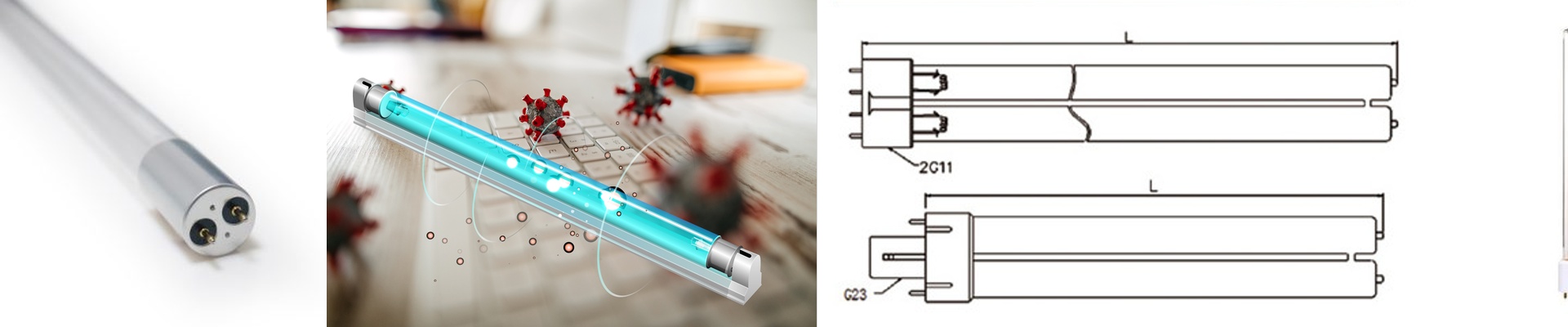
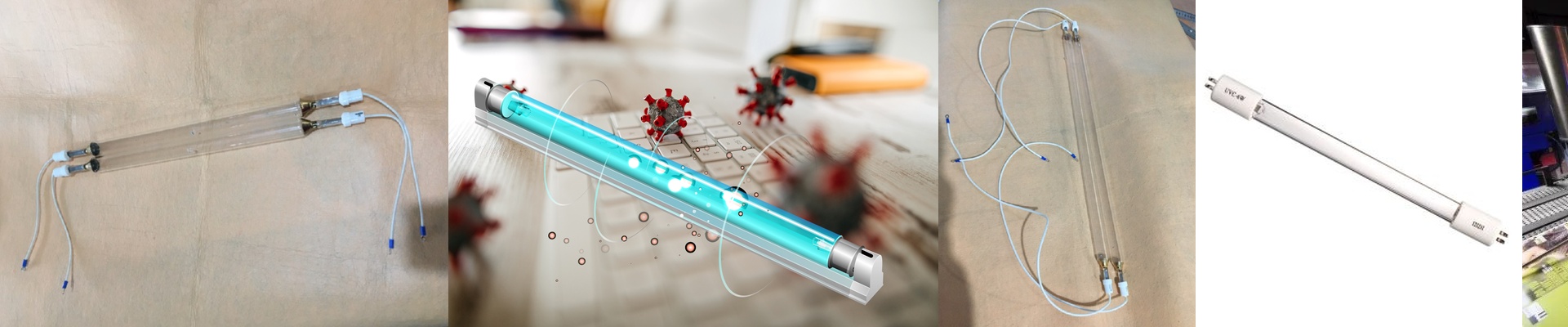
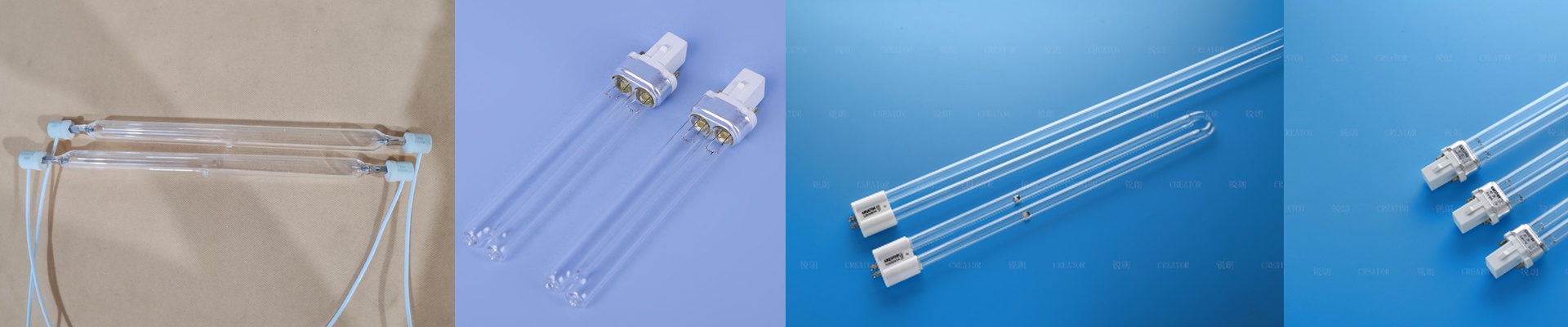
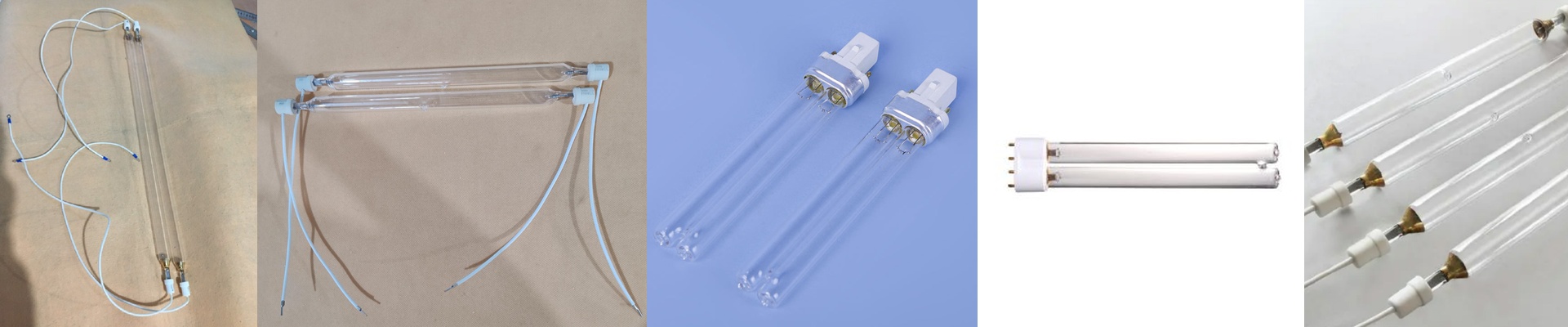
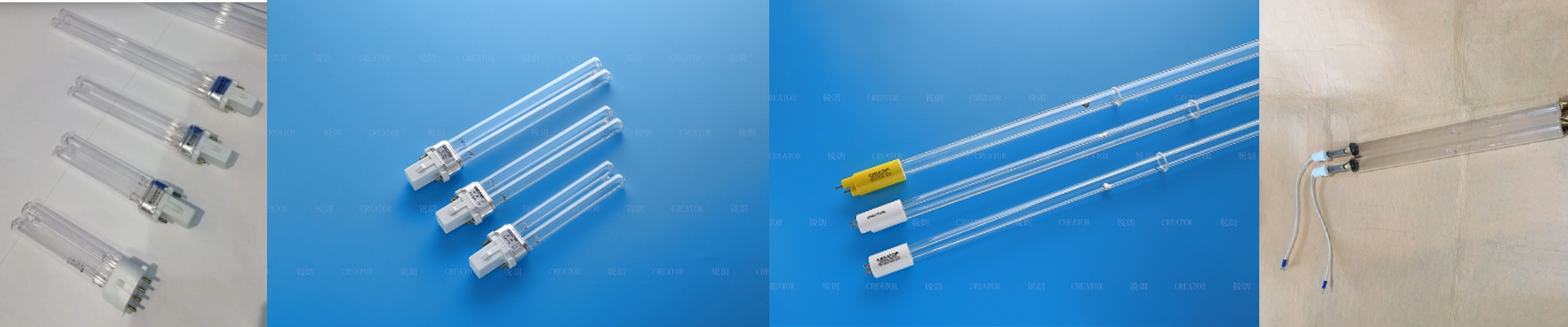
The press is running. The Anatol flash-curing unit is bolted right into the line, tied to the original power supply and matched to the original reflector geometry. You need more throughput and a more stable cure window, but you’re not rewiring the cabinet, re-routing busbars, or re-engineering the interlocks. That constraint isn’t a footnote. It is the job. Upgrading UV output on an existing Anatol flash-curing system comes down to one practical question: can you boost spectral energy density and delivered dose without changing the electrical and mechanical envelope? With a gallium iodide UV lamp engineered to match the dimensions and electrical interface, the answer is yes.
What actually matters in a gallium iodide UV lamp
Gallium iodide (GaI₃) doping shifts the UV output so the dominant peak sits near 365 nm—right where most photoinitiators in UV inks and coatings absorb strongly. Curing isn’t “flip the UV on, ink hardens.” It’s photochemistry, and it has a time constant. In flash curing, the window is short—often just milliseconds. You need high peak irradiance to drive rapid photoinitiator cleavage, and enough total dose to finish cross-linking through the full film. Gallium iodide lamps do both by concentrating output where it does the real work, instead of spreading energy across a broad, less useful spectrum. The performance drivers you can measure and verify:
- Peak irradiance (W/cm²): This sets how fast the surface hits the photoinitiator activation threshold. Higher peak irradiance reduces the risk of surface skinning while the bottom layer stays undercured.
- Dose (mJ/cm²): Delivered energy per unit area. In flash systems, dose has to be repeatable shot-to-shot to keep color and adhesion consistent.
- Spectral output: A tight 365 nm-dominant profile couples better with photoinitiators, so you get cure-through at lower total energy than you do with broadband sources.
- Arc length and envelope geometry: The lamp has to match the reflector’s focal line. Change the arc length and the irradiance profile shifts, and the dose distribution across the substrate drifts.
- Thermal behavior: Flash systems run hot. If the lamp can’t hold output at high temperatures, consistency and repeatability fall apart. That’s why a gallium iodide lamp isn’t just a “replacement bulb.” It’s a matched emitter—output, geometry, and electrical interface engineered as one unit.
Why this fits Anatol flash-curing systems without rewiring
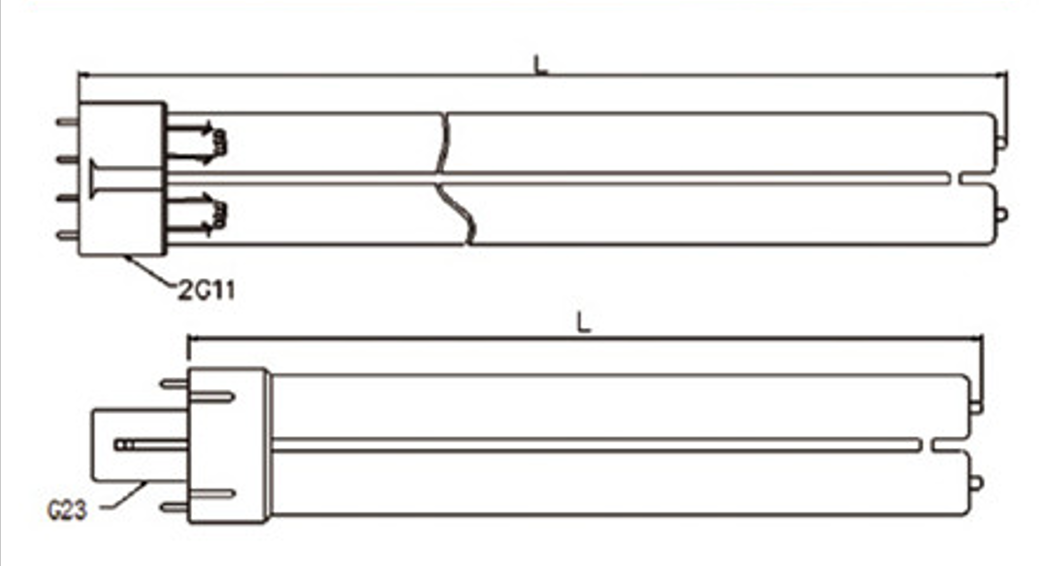
Anatol flash units are built around fast, high-intensity exposure. The reflectors, shutters, and power delivery are tuned to a specific lamp envelope and ignition profile. Swap the lamp and you change the entire energy delivery chain—even if the cabinet looks the same. Our gallium iodide UV lamps are built for non-destructive retrofit because they preserve the two things you can’t compromise: 1. Mechanical and optical compatibility. Lamp length, arc gap, and mounting interfaces match the Anatol reflector assembly, so the beam profile stays stable. Move the arc even a few millimeters and the dose map moves with it. Then you start seeing edge-to-center nonuniformity—thin cure, or color shifts in printing. 2. Electrical compatibility without rewiring. The lamp is engineered to ignite and run on the existing power supply and control logic. No cabinet rewiring, no busbar changes, no re-termination. You keep the same interlocks, the same safety architecture, and the same control panel behavior. What does that translate to on the floor?
- Instant curing: High peak irradiance at 365 nm enables rapid initiation, so the substrate clears the flash zone and sets immediately.
- Deeper penetration: The focused spectral output drives photoinitiator activation deeper into the ink or coating, not just at the surface.
- Complete cross-linking: With stable dose delivery and a tuned spectral profile, the cure finishes through the full film—better adhesion, less residual tack. In practice, you get shorter dwell, fewer rejects, and more consistent results across the sheet—while the cabinet stays exactly as it is.
The real-world gains—measured, not pitched
Flash-curing upgrades earn their keep on the production sheet.
- Faster line speeds: When the cure threshold is reached faster, the press can run higher throughput without giving up cure quality.
- Tighter consistency: Repeatable dose delivery means consistent cure through the run—important for color stability in printing and adhesion in coating applications.
- Lower energy per piece: Gallium iodide lamps concentrate energy into the most effective wavelengths, so you deliver the required photochemical dose with less wasted broadband output.
- Fewer lamp-related stoppages: A matched lamp reduces variability from mismatched geometry and thermal behavior, which cuts unplanned changeouts. None of this is abstract. It shows up as fewer micro-stops, less rework, and scheduling that’s easier to predict.
What to know before you install
A gallium iodide lamp upgrade is straightforward, but it isn’t “drop it in and forget it.” Plan for the real-world constraints.
- Match the ignition and power profile. Connectors may fit, but the lamp still has to play nicely with the existing ignitor and ballast behavior. Mismatched ignition can cause unreliable starting, current surges, or premature failure. Spec the lamp to the exact Anatol model and its electrical interface.
- Control temperature at the reflector. Flash systems put the lamp in a confined, reflective cavity. Reflector temperature directly affects output stability and lamp life. Keep reflectors clean, keep cooling airflow unobstructed, and make operating temperature part of routine maintenance.
- Expect a different spectral feel. Gallium iodide lamps are strong at 365 nm. If your ink set was tuned to a different spectrum, you may need to adjust the dose setting to hit the same cure result. Start with a dose ramp, then lock in the minimum dose needed for full cross-linking.
- Ozone management is still a requirement. High-intensity UV lamps can generate ozone, and the reflector cavity isn’t sealed. Use ozone-free lamp variants where possible, and keep ventilation paths clear. That protects components and keeps the work area compliant.
- Lamp end-of-life is measured, not guessed. Output declines with hours, and the curve isn’t perfectly linear. Schedule replacement based on hours and periodic irradiance checks. A lamp that “looks fine” can still fall below the dose needed for consistent curing. If you keep the electrical interface intact, manage thermal conditions, and match the mechanical envelope, the upgrade stays clean. The system runs as designed—just faster, more consistently, and with a more effective cure. The Anatol flash-curing unit doesn’t move. The difference is what happens when the flash fires: the energy lands where it should, at the wavelength that matters, in the time window you need. That’s the point of a gallium iodide lamp upgrade—precision, intensity, and repeatability without rewiring the plant.